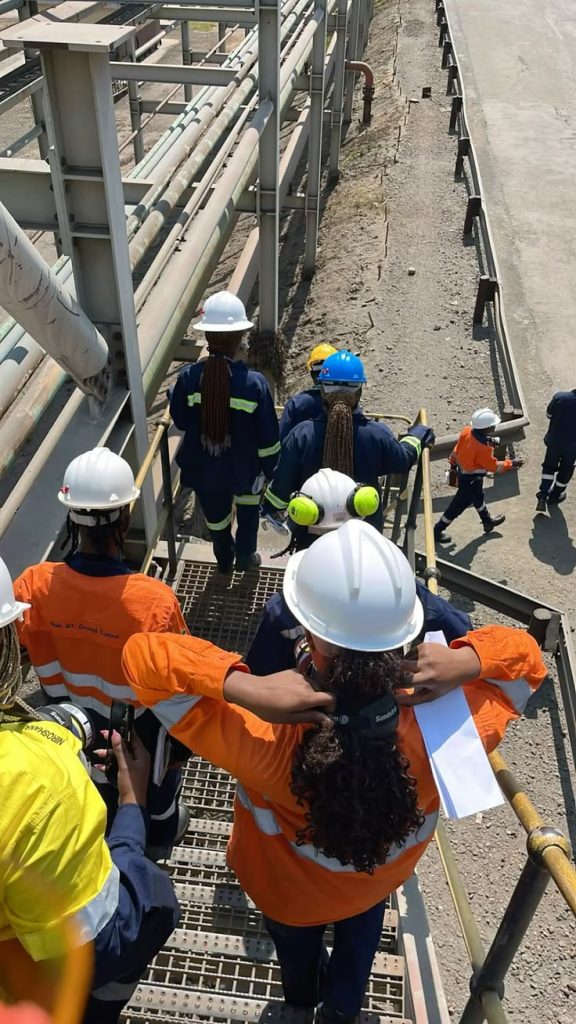




Occupational Health and Safety Management (OHSM) has become one of the most important professional disciplines in today’s world. As industries continue to expand, technology evolves, and workplaces become increasingly complex, organisations are expected not only to achieve business objectives but also to protect the health, safety, and wellbeing of everyone within their operations. Unfortunately, many people still associate occupational health and safety exclusively with mining, oil and gas, or construction. While these industries undoubtedly operate in high risk environments, the reality is that every workplace contains hazards that require effective management. Whether an organisation employs ten people or ten thousand, occupational health and safety management remains an essential part of sustainable business operations.
At Craftstech Academy (CFTA), we believe that workplace safety is not simply a legal obligation but a professional responsibility that should be embraced across every industry. This philosophy inspired the development of our Professional Diploma in Occupational Health and Safety Management (OHSM), a comprehensive six month programme designed to prepare aspiring safety professionals while also helping experienced practitioners strengthen their competence, confidence, and leadership capabilities. Before exploring the programme, however, it is important to understand why occupational health and safety management matters and why organisations continue to invest heavily in qualified professionals.
WHAT IS OCCUPATIONAL HEALTH AND SAFETY MANAGEMENT?
Occupational Health and Safety Management is the systematic process of identifying workplace hazards, assessing risks, implementing effective control measures, monitoring workplace performance, ensuring legal compliance, and continuously improving systems that protect employees, contractors, visitors, organisational assets, and the environment. It goes far beyond preventing accidents. It involves creating workplaces where people can perform their duties safely, efficiently, and with confidence while supporting organisational productivity and long term success.
Many organisations mistakenly believe that safety begins only after an accident occurs. Professional OHSM takes the opposite approach. It focuses on prevention through planning, education, leadership, risk assessment, communication, training, continuous monitoring, and improvement. Instead of waiting for incidents to happen, competent professionals work proactively to identify weaknesses within a system before they result in injuries, illnesses, property damage, environmental harm, or financial losses.
UNDERSTANDING THE DIFFERENT PROFESSIONAL AREAS OF OCCUPATIONAL HEALTH AND SAFETY
Occupational health and safety is a broad profession made up of several specialised disciplines. Although these areas often work together, each has its own focus and responsibilities within an organisation.
OCCUPATIONAL HEALTH AND SAFETY MANAGEMENT
Occupational Health and Safety Management focuses on developing, implementing, evaluating, and continually improving organisational safety management systems. Professionals in this area establish workplace policies, conduct risk assessments, develop safety procedures, manage audits, investigate incidents, monitor performance, and advise management on strategic decisions that improve organisational safety culture.
OCCUPATIONAL HEALTH AND SAFETY ADMINISTRATION
Occupational Health and Safety Administration supports the operational and regulatory side of workplace safety. Professionals maintain documentation, coordinate compliance activities, manage safety records, schedule inspections, prepare reports, organise training programmes, and ensure that organisational procedures remain aligned with legal and industry requirements. Strong administration ensures that safety systems remain organised, effective, and accountable.
HEALTH, SAFETY AND ENVIRONMENT (HSE)
Many industries integrate health, safety, and environmental responsibilities into one professional discipline known as HSE. These professionals not only protect employees but also manage environmental impacts, pollution prevention, waste management, sustainability initiatives, emergency preparedness, and regulatory compliance relating to environmental performance.
OTHER SPECIALISED DISCIPLINES
The profession also includes fire safety management, emergency management, occupational hygiene, industrial hygiene, ergonomics, occupational health, environmental health and safety (EHS), risk management, safety auditing, incident investigation, behavioural safety, process safety, and safety training. These specialised areas demonstrate that occupational health and safety is a diverse profession offering numerous career pathways for individuals with different interests and industry backgrounds.
WHY EVERY INDUSTRY REQUIRES OCCUPATIONAL HEALTH AND SAFETY MANAGEMENT
One of the greatest misconceptions surrounding occupational health and safety is that only high risk industries require qualified professionals. In reality, every workplace presents hazards that must be properly identified, assessed, controlled, and monitored. The nature of those hazards may differ from one industry to another, but the need for effective management remains constant.
CONSTRUCTION
Construction sites contain multiple hazards including working at height, excavations, lifting operations, heavy equipment, temporary structures, electrical installations, and moving vehicles. Without effective occupational health and safety management, these hazards can quickly result in serious injuries or fatalities. Competent professionals ensure that work activities are properly planned, risks are assessed, control measures are implemented, and workers receive the supervision and training necessary to perform their duties safely.
MANUFACTURING
Manufacturing environments involve production machinery, automation systems, chemicals, noise exposure, heat, manual handling, repetitive tasks, and maintenance operations. Occupational health and safety management helps organisations establish safe operating procedures, machine guarding systems, preventive maintenance programmes, hazard communication processes, and emergency response plans that minimise operational risks while improving productivity.
LOGISTICS AND WAREHOUSING
Warehousing and logistics operations depend heavily on vehicle movements, forklift operations, storage systems, loading and unloading activities, inventory management, and manual handling. Poor traffic management, unsafe storage practices, inadequate lifting techniques, or ineffective supervision can easily lead to workplace incidents. OHSM professionals design systems that improve operational efficiency while protecting employees, contractors, and visitors.
HEALTHCARE
Healthcare professionals dedicate their lives to caring for others, yet they themselves face numerous occupational hazards every day. Exposure to infectious diseases, hazardous medications, biological materials, radiation, workplace violence, psychological stress, and musculoskeletal injuries requires comprehensive occupational health and safety management. Effective systems protect healthcare workers while also improving patient safety and the overall quality of healthcare delivery.
MINING
Mining remains one of the world’s most technically demanding industries. Workers regularly encounter blasting activities, confined spaces, heavy mobile equipment, ground instability, dust exposure, explosives, and challenging environmental conditions. Occupational health and safety management provides the structured systems required to identify hazards, manage critical risks, conduct inspections, monitor compliance, and strengthen emergency preparedness throughout mining operations.
OIL AND GAS
The oil and gas industry operates in environments where a single failure can have catastrophic consequences. Fire hazards, explosions, hazardous chemicals, pressure systems, confined spaces, process safety failures, and environmental risks require highly disciplined management systems. Qualified OHSM professionals play an essential role in ensuring operational integrity, regulatory compliance, and effective emergency response planning.
OFFICES, EDUCATIONAL INSTITUTIONS, HOSPITALITY, RETAIL, AND OTHER SERVICE INDUSTRIES
Even workplaces often described as low risk experience hazards that should never be ignored. Slips, trips, falls, electrical faults, poor workstation ergonomics, workplace stress, fire emergencies, indoor air quality concerns, and manual handling injuries occur across offices, schools, hotels, restaurants, retail businesses, and countless other service organisations. Occupational health and safety management ensures that these risks are recognised early and effectively controlled before they affect employees or business operations.
WHY ORGANISATIONS INVEST IN OCCUPATIONAL HEALTH AND SAFETY MANAGEMENT
Organisations that prioritise occupational health and safety management consistently outperform those that treat safety as an afterthought. Effective OHSM reduces workplace injuries, minimises operational disruptions, improves employee confidence, strengthens legal compliance, protects organisational reputation, reduces accident related costs, and supports long term business sustainability. More importantly, it demonstrates that an organisation values its people, which strengthens trust, engagement, and overall workplace culture.
Strong safety performance is rarely achieved by chance. It is the result of competent leadership, well designed management systems, continuous training, effective communication, and a genuine commitment to protecting people. These are the qualities that distinguish organisations recognised for operational excellence.
CAREER OPPORTUNITIES IN OCCUPATIONAL HEALTH AND SAFETY MANAGEMENT
As organisations continue to strengthen workplace safety standards, the demand for qualified occupational health and safety professionals continues to grow across both public and private sectors. Graduates with appropriate knowledge and practical competence may pursue careers as Occupational Health and Safety Officers, HSE Officers, Safety Officers, Safety Supervisors, HSE Coordinators, Safety Advisors, Occupational Health and Safety Managers, Safety Administrators, Compliance Officers, Risk Management Officers, Safety Auditors, Safety Trainers, Emergency Response Coordinators, Environmental Health and Safety Professionals, Occupational Health and Safety Consultants, and many other specialised roles depending on their experience and industry.
The profession also offers opportunities to work across multiple sectors throughout a career. The principles of occupational health and safety management are transferable, allowing professionals to contribute meaningfully in industries ranging from manufacturing and healthcare to logistics, mining, construction, hospitality, education, and beyond.
STUDY OCCUPATIONAL HEALTH AND SAFETY MANAGEMENT AT CRAFTSTECH ACADEMY
Recognising the growing demand for competent safety professionals, Craftstech Academy developed the Professional Diploma in Occupational Health and Safety Management (OHSM) to provide comprehensive, structured, and industry relevant education for both beginners and experienced practitioners. The programme spans six months and is delivered through our online learning platform, allowing students to study at their own pace while balancing professional and personal commitments.
Throughout the programme, students engage with comprehensive learning materials, practical assignments, quizzes, assessments, and workplace focused exercises that encourage critical thinking and professional application rather than simple memorisation. The curriculum is designed to build practical competence that can be applied across multiple industries and workplace environments. Whether your goal is to begin a career in occupational health and safety or to strengthen your existing knowledge, the programme provides a solid foundation for long term professional development.
Complete information regarding the curriculum, admission requirements, tuition, and enrolment process is available on the Craftstech Academy website.
CONCLUSION
Occupational Health and Safety Management is no longer a profession reserved for a handful of industries. It is a critical business function that supports productivity, legal compliance, organisational resilience, and, most importantly, the protection of human life. Every workplace, regardless of size or sector, benefits from competent professionals who understand how to identify hazards, manage risks, develop effective systems, and create environments where people can work safely and confidently.
At Craftstech Academy, we remain committed to developing professionals who will lead this mission with competence, integrity, and excellence. Through quality education and practical training, we are preparing the next generation of Occupational Health and Safety Management professionals to create safer workplaces, strengthen organisations, and make meaningful contributions across industries.