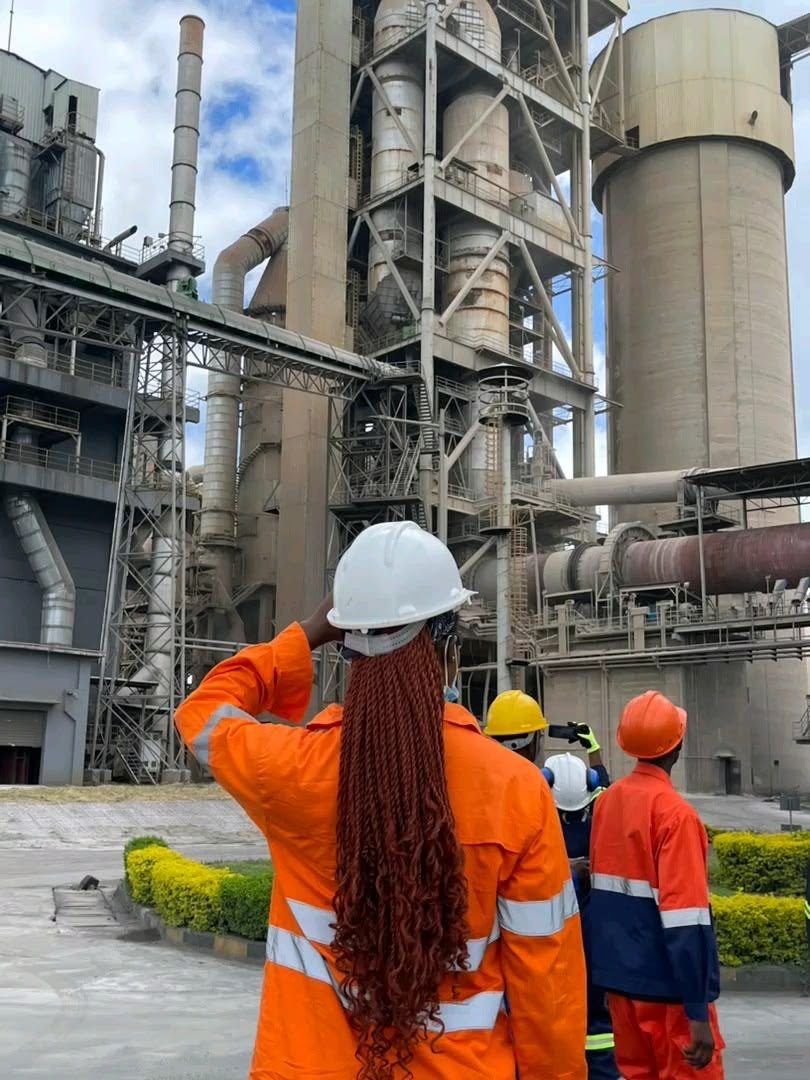
This program is built for people who are serious about working in high risk industries and want to be taken seriously from day one.
If you are looking for something light, this is not it. If you want a real pathway into oil and gas, construction, mining, and industrial operations, then you are exactly who this program was designed for.
Most safety courses teach you definitions. This program trains you to think, act, and operate like a safety professional in real environments. You are not just going to learn what safety is. You are going to understand how safety systems are built, how risks are controlled, how incidents are handled, and how decisions are made under pressure on actual job sites.
From the beginning, you will be introduced to the foundations of occupational health and safety, but it does not stop there. You will move into risk assessment, hazard identification, and safety management systems in a way that reflects what happens in the field, not just what is written in textbooks. You will learn how to read environments, identify dangers before they become incidents, and apply control measures that align with global industry standards.
As you progress, the program takes you deeper into the industries that matter. You will study construction safety, oil and gas operations, and mining environments with clarity and precision. You will understand how drilling sites operate, how refinery risks are managed, how excavation hazards are controlled, and how heavy equipment and high pressure systems are handled safely. These are not surface level topics. You will see how each system connects and where most people make costly mistakes.
You will also learn the operational side of safety that many programs ignore. Permit to work systems, lockout procedures, confined space entry, emergency response planning, incident investigation, and safety audits are all covered in a way that prepares you to actually perform these tasks, not just talk about them. By the time you are done, you should be able to walk onto a site and understand what is happening, what is wrong, and what needs to be corrected.
The program also prepares you for professional certification. Whether your goal is to sit for NEBOSH or OSHA aligned exams, everything you learn here is structured to support that goal. You will be trained to handle scenario based questions, apply safety principles in real contexts, and think the way examiners expect you to think. This is not about memorizing answers. It is about understanding systems deeply enough to apply them anywhere.
Beyond passing exams, this program positions you for employment. You will gain the knowledge and practical understanding needed to function as a safety officer, HSE coordinator, or site safety supervisor. You will learn how companies structure their safety departments, how audits are conducted, how incidents are reported, and how compliance is maintained. You will also understand what employers are actually looking for when they hire.
This program is not built to make you feel comfortable. It is built to make you competent.
If you go through it properly, you will not come out guessing. You will come out with clarity, confidence, and the ability to step into real environments and contribute. You will understand safety beyond theory. You will see it as a system, a responsibility, and a professional standard that you are expected to uphold.
This is where you stop being interested in safety and start becoming a professional in it.
Topics of Course
-
WELCOME TO OHSM
02:54
-
Introduction to Occupational Health & Safety Systems
08:38
-
History & Evolution of Industrial Safety
-
Overview of Industrial Environments
-
How Safety Departments are Structured
-
Core Roles & Responsibilities of Safety Officers
-
COMPETENCY ASSESSMENT QUIZ 1 Roles & Responsibilities of Safety Officers
-
Ethics, Accountability & Professional Conduct in Safety
-
Safety Terminology & Industry Language (Part 1)
-
Safety Terminology & Industry Language (Part 2)
-
Reporting Language In Safety
-
Safety Documentation Structure
-
INTEGRATED ASSESSMENT QUIZ
-
Introduction to Risk Thinking
-
Safety Culture & Human Behavior in Industry
-
Personal Safety Responsibility
-
Mindset Shift Into Industrial Safety
-
Professional Identity as A Safety Officer
-
Safety Awareness & Situational Discipline
-
Introduction to Stop Work Authority
-
OSHA Standards
-
NEBOSH Framework & Examination Structure
-
International Labour Organization (ILO) Standards
-
National Occupational Safety Laws
-
Legal Liability & Duty of Care
-
Contractor Legal Responsibilities
-
Penalties, Enforcement & Regulatory Inspections
-
Documentation for Legal Defense
-
Compliance Systems in Real Operations
-
Regulatory Bodies & Industry Oversight
-
Audit Readiness & Compliance Preparation
-
Reporting Obligations & Legal Communication
-
Ethics in Compliance & Legal Decision-Making
-
Practical Compliance Scenarios & Case Studies
-
Legal Risk Awareness for Safety Professionals
-
Contract Review & Safety Clauses
-
Compliance Failure Analysis
-
Hazard Identification Techniques (JSA, HAZID)
-
Risk Matrix Design & Application
-
Risk Assessment Methods
-
Hierarchy of Controls
-
Safe Systems of Work
-
Job Safety Analysis
-
Change Management in Safety Systems (MOC)
-
Risk Communication in High-Risk Sites
-
Advanced Hazard Identification Methods
-
Risk Evaluation & Decision-Making
-
Residual Risk & Control Effectiveness
-
Human Factors in Risk Management
-
Dynamic Risk Assessment
-
Documentation & Record Keeping in Risk Management
-
Practical Risk Assessment Scenarios & Exercises
-
SECTION 1: CONSTRUCTION SAFETY
-
Excavation & Trenching Safety
-
Heavy Equipment & Crane Operations
-
Working at Heights
-
Construction Site Traffic Management
-
Manual Handling & Material Handling
-
Temporary Structures & Site Stability
-
SECTION 2: OIL & GAS SAFETY
-
Drilling Operations Hazards
-
Refinery Process Safety
-
Hydrocarbon Handling Risks
-
Gas Leak Detection & Control
-
Blowout Prevention Systems (BOP)
-
Confined Space Hazards in Oil & Gas
-
Pipeline Operations & Hazards
-
Tank Farm & Storage Safety
-
Offshore Safety Basics
-
SECTION 3: MINING SAFETY
-
Underground Mining Hazards
-
Surface Mining Safety
-
Rock Fall & Ground Collapse Risks
-
Explosives & Blasting Safety
-
Mine Ventilation Systems
-
SECTION 4: INDUSTRIAL HAZARDS
-
Electrical Arc Flash Safety
-
Machinery Guarding & Mechanical Hazards
-
Noise, Vibration & Heat Stress Exposure
-
Chemical Hazards & Hazardous Substances
-
Fire & Explosion Hazards
-
Pressure Systems & Stored Energy Hazards
-
Ergonomic & Repetitive Motion Hazards
-
Confined Space Entry Procedures
-
Permit to Work (PTW) System
-
Hot Work Permits
-
Lockout/Tagout (LOTO) Systems
-
Isolation Procedures for Energy Sources
-
Toolbox Talks & Pre-Job Briefings
-
Contractor Safety Coordination Systems
-
Work Authorization Systems
-
Permit Integration & SIMOPS Awareness
-
Control of Hazardous Work Activities
-
Communication & Coordination in Controlled Work
-
Inspection & Monitoring of Work in Progress
-
Emergency Response During Controlled Operations
-
Practical Permit & Procedure Application
-
Human Factors in Control Systems
-
Fire Science & Fire Triangle Principles
-
Fire Detection Systems
-
Firefighting Equipment & Response Systems
-
Explosion Prevention & Control
-
Emergency Response Planning (ERP)
-
Evacuation Systems & Muster Points
-
Oil Spill Response Procedures
-
Disaster Management in Industrial Sites
-
Fire Risk Assessment & Prevention
-
Emergency Communication Systems
-
Incident Command & Control Systems
-
First Response & Initial Action
-
Business Continuity & Recovery Planning
-
Emergency Drills & Preparedness
-
Human Behavior in Emergencies
-
Chemical Exposure & Toxicology Basics
-
Respiratory Hazards & Dust Control
-
Hearing Conservation Programs
-
Ergonomics in Construction & Industry
-
Occupational Diseases
-
Heat Stress & Cold Stress Management
-
Heat Stress & Cold Stress Management
-
Health Surveillance Programs
-
Industrial Hygiene Monitoring Systems
-
Biological Hazards & Infection Control
-
Mental Health & Psychological Stress
-
Fatigue Management in Industrial Work
-
Personal Protective Equipment for Health Protection
-
Workplace Sanitation & Welfare Facilities
-
Exposure Limits & Standards
-
Practical Occupational Health Scenarios
-
Incident Classification Systems
-
Near Miss Reporting Systems
-
Root Cause Analysis (RCA) Techniques
-
Whys Method & Fishbone Analysis
-
Accident Investigation Procedures
-
Evidence Collection on Industrial Sites
-
Corrective & Preventive Action (CAPA) Systems
-
Corrective & Preventive Action (CAPA) Systems
-
Reporting Systems & Documentation Flow
-
Incident Notification & Escalation
-
Investigation Interview Techniques
-
Timeline Reconstruction & Sequence Analysis
-
Human Factors in Incident Causation
-
Legal & Compliance Considerations in Investigations
-
Lessons Learned & Knowledge Sharing
-
Practical Incident Investigation Scenarios
-
Structure of a Safety Management System
-
Policy Development & Implementation
-
Safety KPIs & Performance Measurement
-
Internal Safety Audits
-
External Safety Audits & Certification
-
Continuous Improvement Systems (PDCA Cycle)
-
Safety Budgeting & Resource Allocation
-
Leadership Commitment & Organizational Structure
-
Safety Planning & Objective Setting
-
Documentation & Control within SMS
-
Management Review & Decision-Making
-
Integration of Safety into Business Operations
-
Risk-Based Thinking in SMS
-
Performance Review & System Evaluation
-
Practical SMS Implementation Scenarios
-
PPE Selection, Testing & Limitations
-
Industrial Safety Equipment Standards
-
Gas Detection Systems
-
Fire Suppression Technologies
-
Monitoring Sensors in Oil & Gas
-
Digital Safety Systems & Reporting Apps
-
Drones & AI in Safety Inspections
-
Maintenance Safety Systems
-
Equipment Inspection & Integrity Management
-
Calibration & Testing of Safety Equipment
-
Alarm Systems & Warning Devices
-
Data Collection & Safety Analytics Tools
-
Emerging Safety Technologies
-
Technology Failure & Risk Awareness
-
Practical Application of Safety Technology
-
Safety Leadership Principles
-
Safety Culture Development
-
Human Error & Behavior-Based Safety (BBS)
-
Communication in High-Risk Environments
-
Toolbox Leadership & Field Supervision
-
Contractor Management & Coordination
-
Conflict Management on Site
-
Training & Competency Development
-
Decision-Making Under Pressure
-
Influence & Authority in Safety Roles
-
Worker Engagement & Participation
-
Fatigue, Stress & Human Performance
-
Ethics, Integrity & Professional Conduct
-
Practical Leadership Scenarios & Application
-
Introduction to Process Safety Management (PSM)
-
Major Hazard Facilities (COMAH-Style Environments)
-
Hazard and Operability Study (HAZOP)
-
Layers of Protection Analysis (LOPA)
-
Safety Critical Elements (SCE)
-
Process Hazard Analysis (PHA)
-
Control of Major Accident Hazards
-
Pressure Systems Safety
-
Pipeline Integrity & Safety
-
Process Safety Barriers & Control Systems
-
Alarm Management in Process Systems
-
Change Management in Process Systems
-
Incident Prevention in Process Safety
-
Human Factors in Process Safety
-
Practical Process Safety Scenarios
-
SIMOPS (Simultaneous Operations) Management
-
Shutdown, Turnaround & Maintenance Safety (TAR)
-
Commissioning & Decommissioning Safety
-
Marine & Offshore Safety Basics
-
Logistics & Supply Chain Safety
-
Warehouse & Material Handling Safety
-
Fleet & Transport Safety Management
-
Lifting Operations & Rigging
-
Interface Management in Complex Operations
-
Asset Integrity During Operations
-
Emergency Preparedness in Complex Operations
-
Human Factors in Complex Operations
-
Contractor Integration in Large Operations
-
Real Operational Case Studies & Failure Analysis
-
Operational Risk Decision-Making
-
Environmental Impact Assessment (EIA)
-
Waste Management Systems (Industrial)
-
Oil Spill Prevention & Environmental Protection
-
Air Pollution Control in Industrial Sites
-
Water Contamination Prevention
-
ESG (Environmental, Social, Governance) in Safety
-
Climate Risk & Industrial Safety
-
Environmental Compliance & Regulatory Systems
-
Pollution Monitoring Systems
-
Sustainable Industrial Operations
-
Environmental Emergency Response
-
Hazardous Materials Environmental Control
-
Community & Environmental Impact Relations
-
Environmental Risk Assessment Techniques
-
Case Studies in Environmental Failures
-
Working in Extreme Conditions (Offshore, Desert, Remote Sites)
-
Radiation Safety (Industrial Exposure Level)
-
Explosives Safety (Mining Focus)
-
High-Pressure Systems & Boiler Safety
-
Tank Farm Operations Safety
-
LNG / LPG Handling Safety
-
Pipeline Construction Safety
-
Extreme Environment Survival Systems
-
Hazardous Energy Control in Specialized Operations
-
Cryogenic Safety Systems
-
Fire and Explosion Risk Control in High-Risk Facilities
-
Equipment Integrity in Extreme Operations
-
Human Performance in High-Risk Environments
-
Emergency Response in Specialized Operations
-
Case Studies in Specialized Industrial Failures
-
Industrial Security Awareness
-
Site Access Control & Safety
-
Emergency Security Response Coordination
-
Terrorism Risk Awareness (Oil & Gas Critical Sites)
-
Cybersecurity for Industrial Safety Systems
-
Perimeter Security Systems
-
Emergency Lockdown Procedures
-
Threat Assessment & Risk Profiling
-
Security Incident Management
-
Human Behavior & Security Risks
-
Technology in Industrial Security
-
Contractor & Third-Party Security Control
-
Critical Infrastructure Protection
-
Crisis Communication During Security Events
-
Case Studies in Industrial Security Failures
-
Safety Data Analysis & Interpretation
-
Incident Trend Analysis
-
Predictive Safety Analytics
-
Digital Reporting Systems
-
Safety Dashboards & KPI Tracking
-
Documentation Control Systems
-
Data Integrity & Quality Control
-
Safety Metrics Design & Selection
-
Reporting Structures & Information Flow
-
Data Visualization in Safety Management
-
Data Visualization in Safety Management
-
Root Cause Insights from Data
-
Digital Safety Ecosystems Integration
-
Compliance Reporting & Regulatory Data
-
Real-Time Monitoring Systems
-
Case Studies in Data-Driven Safety Failures
-
Competency Frameworks for Safety Roles
-
Training Needs Analysis
-
Designing Safety Training Programs
-
Certification Standards & Accreditation Systems
-
Workforce Induction Programs
-
Continuous Professional Development (CPD)
-
Skill Assessment & Performance Evaluation
-
On-the-Job Training Systems
-
Instructor-Led vs Field-Based Training
-
Competency Authorization & Work Approval
-
Training Records & Documentation Systems
-
Behavioral Training in Safety Performance
-
Simulation-Based Training Systems
-
Certification Maintenance & Renewal Systems
-
Case Studies in Training Failures
-
Full Site Hazard Identification Simulation
-
Real-Life Risk Assessment Workshops
-
Mock Permit to Work System Execution
-
Incident Investigation Simulation (From Start to Report)
-
Emergency Drill Execution
-
Safety Audit Simulation
-
Integrated Site Simulation Exercise
-
Real-Time Decision-Making Drills
-
Communication Under Operational Pressure
-
Contractor Coordination Simulation
-
Permit Conflict Resolution Scenarios
-
Emergency Escalation Simulation
-
Field Observation & Behavioral Assessment
-
Safety Reporting Under Pressure
-
Full Certification Simulation Assessment
-
HSE Management Software Systems
-
Incident Reporting Platforms
-
Risk Assessment Digital Tools
-
Inspection & Audit Apps
-
Document Control Software
-
Digital Safety Ecosystems Integration
-
Mobile Safety Applications in Field Operations
-
Data Security in Safety Software
-
Automation in Safety Management Systems
-
Real-Time Monitoring and Dashboard Systems
-
Compliance Tracking Software
-
Predictive Analytics Tools in Safety
-
Reporting and Visualization Tools
-
Software-Based Incident Investigation Tools
-
Industry Case Studies on Digital Safety Failures
-
How Safety Officers Actually Get Hired
-
CV & Portfolio Building for Safety Professionals
-
Interview Preparation for HSE Roles
-
Site Experience Requirements
-
Freelance vs Full-Time Safety Careers
-
Salary Structures in Oil, Gas & Construction
-
International Safety Certifications Pathway
-
Career Positioning & Professional Identity
-
Job Market Reality in Safety Industry
-
Career Growth Pathways in Safety
-
Professional Reputation & Trust Building
-
Practical Job Readiness Simulation
-
Career Mistakes That Stop Progress
-
Industry Entry Strategy Planning
-
Case Studies of Real Career Paths
-
OSHA Exam Preparation Framework
-
NEBOSH Scenario-Based Question Training
-
Case Study Interpretation (Oil, Gas, Construction)
-
Practical Site Risk Assessment Exams
-
Mock Safety Audit Exercises
-
Incident Investigation Simulation
-
Final Practical Certification Assessment
-
Exam Strategy & Answer Structuring
-
Practical vs Theoretical Balance in Exams
-
Common Exam Failure Causes
-
Revision & Study System for Certification
-
Industry Simulation-Based Testing
-
Certification Pathway Strategy
-
Professional Readiness Evaluation
-
Professional Readiness Evaluation